Preventive Care News
Prevention · Research · Healthy Living · Longevity · Community
Home DrPH Program Newsletter Publications Research Dr. Dos Santos Search
Loma Linda University School of Public Health
The Quarterly Edition · September 2026

Preventive Care Newsletter

September 2026 edition of the Preventive Care Newsletter.

September 2026
In This Issue
Health News Humor Past Activities Events Recipes Spiritual Well-Being Connect & Follow YouTube DrPH Program
Health News

Preventive Care News

Breastfeeding and Cancer

Evidence from the WCRF International's flagship research program, Cancer Update Program (CUP Global), shows that breastfeeding reduces a mother's risk of breast cancer, with longer durations of breastfeeding associated with greater protection. This adds to the many well established benefits of breastfeeding for infants and families, and reinforces the importance of viewing breastfeeding as part of a life-course approach to cancer prevention.

Exercise and Cancer

According to Moore et al. (2016) in JAMA Internal Medicine, an analysis of 1.44 million adults found that higher leisure-time physical activity was associated with lower risks of several cancers, including esophageal, liver, kidney, uterine, colon, rectal, bladder, and breast cancers. Some associations were partly explained by BMI, while the increased melanoma risk observed among active adults was likely related to greater sun exposure during outdoor exercise. Overall, regular physical activity may help reduce cancer risk, with benefits for several cancers independent of BMI and smoking

Diabetes Prevention

According to Knowler et al. (2002) in The New England Journal of Medicine, the Diabetes Prevention Program followed 3,234 adults at high risk for type 2 diabetes for an average of 2.8 years. An intensive lifestyle program targeting 7% weight loss and 150 minutes of weekly physical activity reduced diabetes incidence by 58%, compared with 31% for metformin. The lifestyle intervention was particularly effective among adults aged 60 years and older.

Diet and Mortality

According to Shan et al. (2023) in JAMA Internal Medicine, researchers followed more than 119,000 adults for up to 36 years and found that greater adherence to healthy eating patterns was associated with lower risks of death from all causes, cardiovascular disease, cancer, and respiratory disease. These eating patterns emphasized vegetables, fruits, whole grains, nuts, and legumes while limiting red and processed meats, added sugars, and sodium.
Preventive Care DRPH Program

Preventive Care DRPH Program

The Preventive Care DrPH Program trainsprofessionals for interventions at the individual,group, and population levels to prevent chronicnon-communicable diseases, also known aslifestyle-related diseases. We use evidence-based findings and also the traditions of theLoma Linda Blue Zone.
Please share this with your friends, family, andon social media.
Humor

Humor

DID YOU KNOW?

A good laugh may do more than brighten your day. Research suggests that laughter can help relieve stress, ease tension, improve mood, and strengthen social connection. While humor is not a substitute for healthy habits or medical care, enjoying moments of laughter can still be a meaningful part of overall well-being. So take a moment, enjoy these cartoons, and remember: preventive care can have a lighter side, too!
JOE WELL NESS
JOE WELL NESS
JOE WELL NESS
Past Activities

Past Activities

LLU CHAMBER OF COMMERCE LEADERSHIP SUMMIT 2026: WISDOM FROM THE BLUEZONES

LLU CHAMBER OF COMMERCE LEADERSHIP SUMMIT 2026: WISDOM FROM THE BLUEZONES

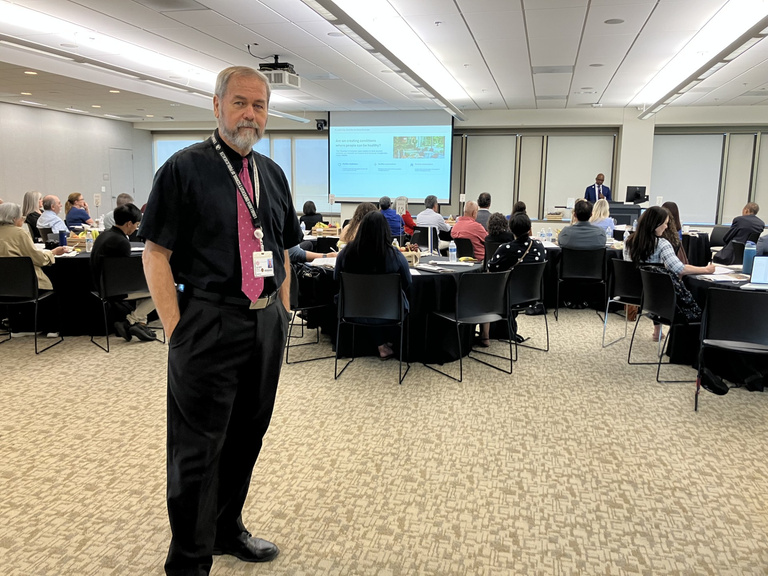
The Preventive Care team recently participated in the LLU Chamber of Commerce Leadership Summit 2026: Wisdom from the Blue Zones, bringing practical health education and preventive screenings directly to attendees. During the health expo, participants received handgrip-strength and blood pressure assessments, as well as body composition scans measuring body-fat percentage, lean body mass, body water, body mass index, and estimated resting energy expenditure. The team also provided personalized nutrition counseling to help participants understand their results and identify realistic ways to support their health. The team members who helped make the event possible are pictured from left to right: Umang Sharma, Hildemar Dos Santos, Marijke Sawyer, and Sunny Chen.

Dr. Hildemar Dos Santos delivered an engaging presentation on the role of plant-based nutrition in promoting a longer, healthier life. His talk explored how nutritious dietary patterns may support physiological function, promote longevity, and help reduce reliance on medications for preventable chronic conditions. By combining education, health assessments, and individualized guidance, the event allowed attendees to learn more about their current health while discovering practical steps toward lifelong wellness.
Preventive Care 2026 Graduation

Preventive Care 2026 Graduation

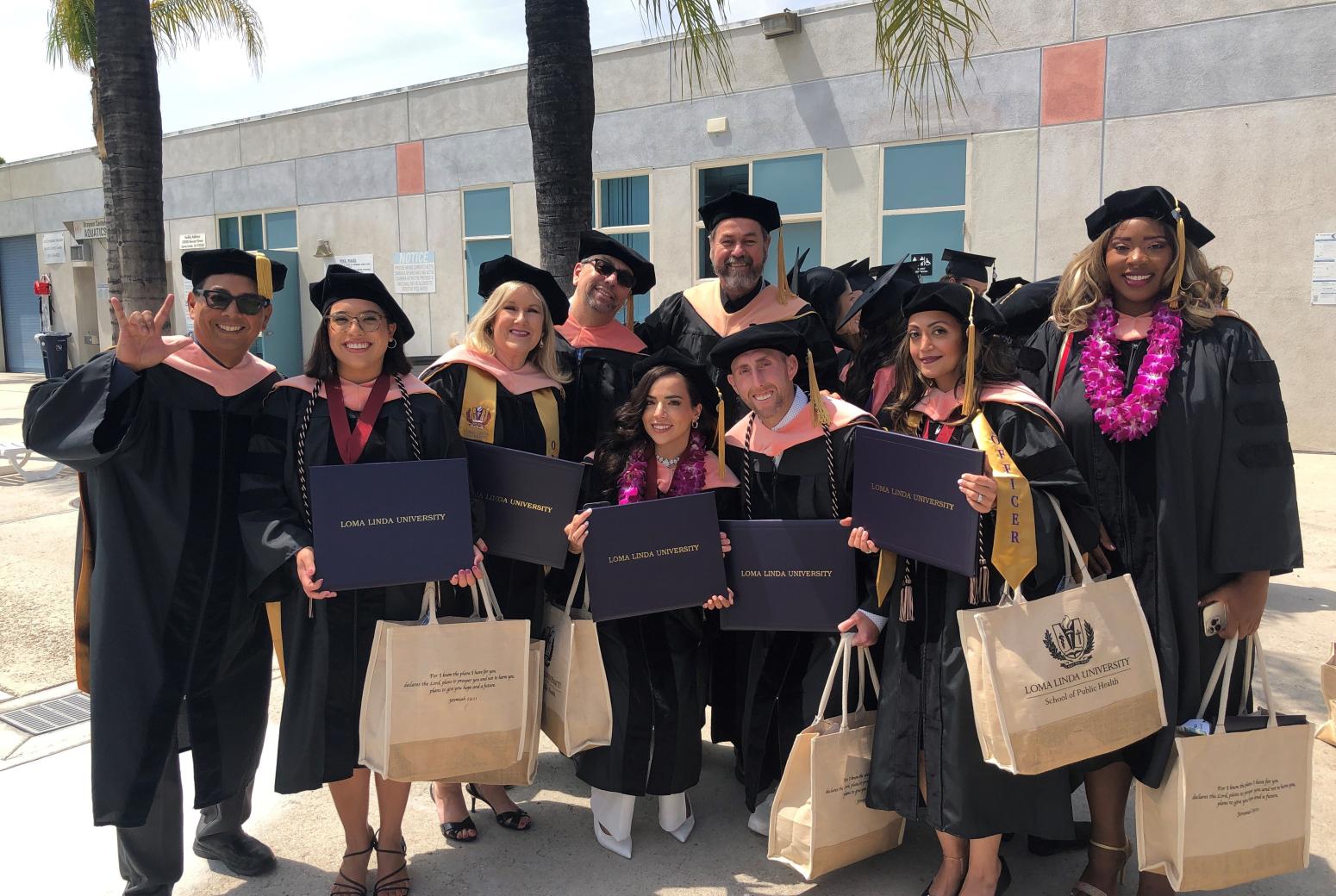
The 2026 Preventive Care graduation ceremony celebrated graduates from a diverse range of cultural and international backgrounds. Pictured in the front row, from left, are Dr. Hildemar Dos Santos, Jocelyn Pierre (Trinidad and Tobago), Melissa Cline (Hawaii, USA), Christa Lamont (USA), and Claudia Boafo (USA). Pictured in the second row, from left, are Dr. Beeson, Kevin Bernadt (USA), Ruben Chipuli (Mexico), Luiz Sella (Brazil), and Dr. Medina.
Upcoming Events

Upcoming Events

FOOD AS MEDICINE

FOOD AS MEDICINE

September Newsletter Test

When November 22, 2026 · 8:00 AM
Where 1440 Multiversity, Scotts Valley
Testing the upcoming events section.
Event organized by Maria Jose Hummel, Preventive Care DrPH student.
RESEARCH WORKSHOP ON SPIRITUALITY, RELIGION AND HEALTH

RESEARCH WORKSHOP ON SPIRITUALITY, RELIGION AND HEALTH

When September 17–18, 2026 · 9:00 AM–4:30 PM
Where Yeretzian Library, School of Religion Centennial Complex, Room 3234 24760 Stewart St, Loma Linda, CA 92354
Selected Topics Covered:

- Resources for learning more about spirituality and health
- Previous research on religion, and spirituality and health
- Strengths and weaknesses of previous research
- Designing different types of research projects (cross-sectional, prospective, experimental, and qualitative)
- Writing a research paper for publication; getting it published
- Presenting research to professional and public audiences
Join internationally renowned researcher Dr. Harold G. Koenig, director of the Center for Spirituality, Theology and Health at Duke University, for a 3.5-day in-depth research workshop. Dr. Koenig is a leading voice in the field of religion, spirituality, and health, with over 650 scientific peer-reviewed articles and more than 65 books to his name.

Sep 17, 2026 to Sep 18, 2026 - 9:00AM - 4:30PM

Whether you are a healthcare professional, student, chaplain, or researcher – this is a rare opportunity to grow your research skills, receive expert guidance, and join a global movement advancing whole person care.

IMPORTANT:
LLU Student - Please register using your official students.llu.edu email address
LLU Faculty and Staff — Please register using your official llu.edu email address
Register Here →
Healthy Living

Healthy Recipes

Black Beans and Sweet Potato Tacos

Black Beans and Sweet Potato Tacos

Servings: 4
Preparation time: 15 minutes
Cooking time: 25–30 minutes

Ingredients

2 medium sweet potatoes, peeled
and cut into small cubes
1 tablespoon olive oil
1 teaspoon ground cumin
1 teaspoon smoked paprika
½ teaspoon chili powder
¼ teaspoon salt
1 can (15 ounces) black beans,
drained and rinsed
8 small corn or flour tortillas
1 avocado, sliced
½ cup shredded lettuce or cabbage
½ cup salsa
1 lime, cut into wedges
Chopped cilantro, optional

Instructions

1.Preheat the oven to 425°F.
2.Place the sweet potatoes on a baking
sheet. Toss them with olive oil, cumin,
paprika, chili powder, and salt.
3.Roast for 25–30 minutes, stirring
halfway through, until tender and lightly
browned.
4.Warm the black beans in a small
saucepan over medium heat. Add a
splash of water if they begin to dry out.
5.Warm the tortillas in a skillet or
microwave.
6.Fill each tortilla with roasted sweet
potatoes and black beans.
7.Top with avocado, lettuce or cabbage,
salsa, cilantro, and lime juice.
8.Serve immediately.
Tofu and Vegetable Stir-Fry

Tofu and Vegetable Stir-Fry

Servings: 4
Preparation time: 15 minutes
Cooking time: 15 minutes

Ingredients

Stir-Fry
1 package (14 ounces) firm or extrafirm
tofu
1 tablespoon cornstarch
1 tablespoon vegetable or sesame
oil
2 cups broccoli florets
1 bell pepper, sliced
1 medium carrot, thinly sliced
2 green onions, sliced
Cooked brown or white rice for
serving
Sauce
¼ cup low-sodium soy sauce
2 tablespoons water
1 tablespoon rice vinegar
1 tablespoon maple syrup or brown
sugar
1 teaspoon sesame oil
2 garlic cloves, minced
1 teaspoon grated fresh ginger
1 teaspoon cornstarch

Instructions

1.Drain the tofu and gently press it
with paper towels to remove
excess moisture. Cut it into cubes.
2.Toss the tofu with 1 tablespoon of
cornstarch.
3.Whisk all the sauce ingredients
together in a small bowl.
4.Heat the vegetable oil in a large
skillet over medium-high heat.
5.Add the tofu and cook for
approximately 6–8 minutes,
turning occasionally, until golden
on several sides. Remove it from
the skillet.
6.Add the broccoli, bell pepper, and
carrot. Stir-fry for 4–5 minutes,
until slightly tender but still crisp.
7.Return the tofu to the skillet and
pour in the sauce.
8.Cook for another 1–2 minutes,
stirring until the sauce thickens
and coats the tofu and vegetables.
9.Garnish with green onions and
serve over rice.
Spiritual Well-Being

Spiritual Well-Being

Lessons from a funeral

From the Office of Dr. Dos Santos

Have you been to a funeral? I know; what kind of question is that? Well, the bible says it is better to go to a funeral than to a party. In the last year, I have been to at least five parties and only one funeral. Yes, it was a friend who died of a heart attack. Very sad. So why in the world would it be better to go to a funeral? Seeing a lot of crying people complaining about the unfortunate tragedy and trying to comfort those left behind?

But during the memorial, I heard many people talking about the resurrection of the saints during the Second Coming of Jesus. And they said good things about the deceased, that he was a man of God. So, I started thinking, “Would I make it?” So, this made me think more about my connection with Jesus.

Another point was that my deceased friend used to do a lot of things, which made me think, should I slow down? Am I having a balanced life? Well, at least he was a family man and had his priorities right, with God and family first. At the end, the pastor asked the friends and church family to support the widow and the children. Again, very sad, but very practical. You want to do something for your friend who left; do something for his family.

If I compare this experience to a party, both involve celebration and good food. The funeral has an advantage: no gifts are expected, at least not from the person being celebrated. Funerals can be kind of fun, with lots of funny stories about the deceased and a good place for interaction, but they can't compare to a party filled only with happiness and laughter.

But the main difference was regarding life. Yes, when someone dies, we learn more about life, or we should learn. What can we learn? First, life is short; nothing is guaranteed; we can die tomorrow from an unexpected cause. We learn to be thankful and have more quality time with friends and family while we are alive. And finally, maybe more importantly than all, this life is not final, but we should put our hopes in the eternal life Jesus promised to his followers. So, a funeral teaches us more about that life.

“It is better to go to a funeral than to a party. We all must die, and everyone living should think about this. Ecclesiastes 7:2 NCV

How to save during the financial crisis?

From the Office of Dr. Dos Santos

I was on my daily walk when I noticed the driver of a Mercedes-Benz delivering merchandise to a house in my neighborhood in Redlands, CA. Then I thought, “Either Mercedes cars are selling for lower prices, or he lost his job and is trying to earn some extra money to pay his bills. Okay, he might be the store owner, and his delivery person did not show up. Or maybe he fired the guy and, because of the financial crisis, is doing the work himself.”

My point here has nothing to do with why the guy was driving a Mercedes or whether he was working for Uber, Lyft, or doing something else. My point is how we can save money during a financial crisis, especially when we see supermarket prices increasing almost weekly while our salaries remain as flat as a pancake.

And, of course, I would argue that one area where we can save is food. We can eat healthier and spend less, starting by reducing how often we eat out. Many people eat out too often, which can be a significant drain on both their wallets and their health. Going to a restaurant nowadays can be costly. You can easily spend $100 per person. So, eat more at home and save money.

Also, reduce or quit alcohol. I was standing in line at the supermarket, and the guy ahead of me had 10 bottles of alcohol, maybe whiskey or something similar. I could see a price tag of $50 each, which would be $500. Boy, if I have a party and buy 10 bottles of Martinelli’s,* the total would be at most $30! If that is not enough savings, check the drink options at a restaurant, and you will find wines and other alcoholic beverages priced at $1,000 or more per bottle.

And you can reduce your meat intake. At the same supermarket, a lady had a package of meat about the size of a turkey that was priced at $90. I told my wife that even Impossible Burgers do not cost that much, and she agreed that meat has become too expensive. So, do you want to save? Eat less meat and more beans, soy, nuts, and tofu.

Eat more veggies and fruits! “Well, Dr. Dos Santos, they are also becoming expensive!” I know, but there are some options, such as searching for deals, checking different supermarkets, using coupons, etc. Another option would be to plant your own garden. Do not have space? Go hydroponic!

Yes, hydroponic. Before the legalization of marijuana in many U.S. states, hydroponics had a bad reputation because it was often associated with cultivating marijuana with little or no soil inside an apartment or small house. I used to work in a county jail many years ago, where I was involved in helping prisoners who were addicted to drugs. There, I met a few individuals who had cultivated marijuana using hydroponics and were subsequently arrested because of it.

However, the term has evolved and is now commonly applied to home gardening. Please Google it to find more information and tips on hydroponics for home gardening. If someone can cultivate marijuana, which is a bush, in a small room requiring almost no soil, I believe we can grow tomatoes, lettuce, broccoli, and cauliflower using the same system.

In fact, I once attended a lecture on hydroponic gardening for the community, and it was a fascinating experience. This type of garden can be developed inside one’s own home or even in a school, church, or community setting. But please, do not say that I am encouraging people to use hydroponics to cultivate marijuana!

Remember, I am against addictive drugs. Even caffeine is on my list of substances I do not recommend, along with marijuana, tobacco, alcohol, and other drugs.

Reducing how often you eat out, drinking less alcohol, eating less meat, increasing your intake of beans, fruits, and vegetables, and even growing some of your own vegetables are all options to consider. They could also save you money by helping you stay healthier and potentially reducing what you spend on doctor’s visits, procedures, and medications.

However, perhaps more important than saving money is protecting your health. Money can be earned again through hard work, but if you lose your health, it may not be so easy to get it back. Investing in your health is the best way to go.

“Why spend money on what is not bread, and your labor on what does not satisfy? Listen, listen to me, and eat what is good, and you will delight in the richest of fare.” Isaiah 55:2

*Martinelli’s is a brand of nonalcoholic sparkling apple juice.
Media & Resources

Connect & Follow

Facebook

Facebook

Preventive Care Community
Connect with the Preventive Care community on Facebook.
Join Facebook Group →
Website

DrPH Preventive Care Program

Loma Linda University School of Public Health
Learn more about the DrPH Preventive Care program, academics, and program information.
Visit Program Website →
Website

Preventive Care News

The Quarterly Preventive Care Newsletter
Visit Preventive Care News for the latest quarterly newsletter, health information, activities, recipes, research, and more.
Visit Preventive Care News →
Instagram

Instagram

@doutorlomalinda
Follow Dr. Dos Santos on Instagram for preventive care, healthy living, and program updates.
Follow on Instagram →
YouTube

YouTube Channel

Dr. Hildemar Dos Santos
Explore videos and presentations on preventive care, healthy living, disease prevention, and the Preventive Care program.
Visit YouTube Channel →
Watch & Learn

YouTube Sessions

Non-Communicable Diseases Prevention
YouTube Session

Non-Communicable Diseases Prevention

Dr. Dos Santos
A presentation by Dr. Dos Santos exploring the prevention of non-communicable diseases and the role of preventive care.
Watch Video →
Preventive Care Program – 50 Years Celebration
YouTube Session

Preventive Care Program – 50 Years Celebration

Celebrating 50 Years of Preventive Care
A celebration of 50 years of the Preventive Care Program and its legacy of education, prevention, and healthy living.
Watch Video →
Preventive Care Program History
YouTube Session

Preventive Care Program History

The Story of Preventive Care
Explore the history and development of the Preventive Care Program and its commitment to advancing health through prevention.
Watch Video →
Preventive Care Applied Practice
YouTube Session

Preventive Care Applied Practice

Applied Practice Experience
See preventive care principles in practice through the program’s applied learning and professional experience.
Watch Video →
Preventive Care Applied Practice – Part 2
YouTube Session

Preventive Care Applied Practice – Part 2

Applied Practice Experience
Continue exploring how preventive care principles are applied through practical learning and real-world experience.
Watch Video →
Preventive Care Christmas Party 2023
YouTube Session

Preventive Care Christmas Party 2023

Preventive Care Community
Highlights from the Preventive Care Program’s 2023 Christmas celebration with students, faculty, and friends of the program.
Watch Video →
Preventive Care DrPH Program

DrPH Program Information

Lead the Charge Against Lifestyle Diseases with a DrPH in Preventive Care

Lead the Charge Against Lifestyle Diseases with a DrPH in Preventive Care

Preventive Care, DrPH

The online Doctorate of Public Health in Preventive Care program centers on studying chronic lifestyle-related diseases, including heart disease, diabetes, and hypertension. Graduates are equipped to understand the leading causes of diseases and are adept at determining the most effective ways to prevent, improve, and even reverse them. Following the teaching, preaching, and healing model inspired by Jesus Christ, this program is tailored for working professionals seeking career growth opportunities.

This program has been designated as an American College of Lifestyle Medicine (ACLM) Full Academic Pathway, giving students a unique opportunity to jumpstart their journey toward certification in lifestyle medicine.

In alignment with the Loma Linda Blue Zone Lifestyle traditions, the Preventive Care program incorporates principles that promote longevity and well-being. By embracing these time-tested practices, graduates gain a comprehensive understanding of preventive care and contribute to healthier communities through lifestyle interventions.
Program Details →
Preventive Care News Loma Linda University School of Public Health · Preventive Care DrPH Program

Research, education, community, longevity, and practical preventive health.

Explore

Home
DrPH Program
Newsletter
Publications
Research
Search

About

Dr. Dos Santos
Loma Linda University School of Public Health

© 2026 Preventive Care News. All rights reserved.